
Macro at a Glance
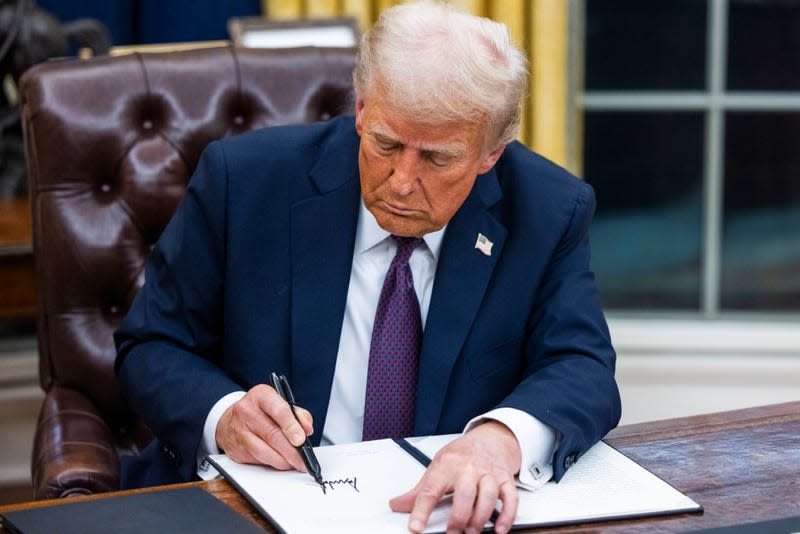
President Trump, inaugurated January 20, 2025, unveiled significant economic initiatives. He proposed "cutting corporate taxes to 15% for U.S.-based production, funded by higher tariffs, including a universal 2.5% import tax" alongside targeted duties on China, Canada, and Mexico. The administration launched the Stargate Initiative—a $500 billion artificial intelligence infrastructure venture involving OpenAI, Oracle, and SoftBank, beginning with $100 billion invested in Texas.
Diplomatically, Trump escalated tensions by demanding control of the Panama Canal, suggesting Canada's annexation as the 51st state, and pressuring Denmark to surrender Greenland. On January 26, he imposed 25% tariffs on Colombia, which promptly capitulated. While aggressive policies showed initial success, long-term global stability risks emerged.
Federal Reserve Chair Jerome Powell resisted presidential pressure to maintain steady rates between 4.25%–4.5%. Powell stated the Fed was "in no rush to adjust its policy stance," signaling no imminent rate cuts. However, the Fed faced pressure as inflation stalled and fourth-quarter GDP growth disappointed at 2.3% versus the anticipated 3.1%.
One Sector, One Insight
Basic Materials and Energy
Trump's signature slogan "Drill, Baby, Drill" anchors his energy expansion strategy. On December 20, he signed an executive order reopening 5 million hectares for oil exploration, including Alaska's Arctic National Wildlife Refuge and the Gulf of Mexico. The Interior Department accelerated drilling permits from six-month timelines to 45 days, aiming to flood markets with American oil to suppress prices and curb inflation. However, effectiveness remains questionable since petroleum products comprise approximately 8% of U.S. consumer price inflation.
Consumption and General Public Services
Luxury conglomerates showed divergent results. LVMH reported "a 1% increase in fourth-quarter sales (23.9 billion euros)" despite weakening Chinese demand, bolstered by fashion and leather goods strength. Burberry improved expectations with "a 4% drop in comparable sales," better than double-digit declines anticipated, reflecting CEO Joshua Schulman's strategic initiatives. Richemont led the sector with "a 10% increase in sales (6.2 billion euros)," compensating for soft Chinese performance through robust American and European demand.
Financial Services
The six largest U.S. banks—JPMorgan Chase, Bank of America, Citigroup, Wells Fargo, Goldman Sachs, and Morgan Stanley—"generated $142 billion in profits in 2024, a 20% increase compared to 2023," marking the second-best performance since 2007. High interest rates, robust economic conditions, and revived Wall Street activity drove results. Payment processors Visa and Mastercard benefited from expanded consumer and corporate spending in credit card and payment divisions.
Healthcare
On January 23, 2025, Purdue Pharma and the Sackler family reached a "$7.4 billion settlement to resolve lawsuits over their role in the opioid crisis" after the Supreme Court rejected a previous $6 billion agreement. The Sacklers will contribute $6.5 billion over 15 years while Purdue adds nearly $900 million. Unlike the earlier deal, this settlement provides no immunity from civil lawsuits, potentially establishing precedent for similar public health accountability cases.
Industrials
Nippon Steel's December 2023 announcement of a "$14.9 billion bid to acquire U.S. Steel" faced presidential obstruction. President Biden blocked the transaction on January 3, 2025, citing national security concerns regarding foreign industrial control. Both Kamala Harris and Donald Trump opposed the deal, and observers noted election-year political considerations regarding deindustrialization in Pennsylvania, U.S. Steel's headquarters state. The companies subsequently pursued litigation against government interference.
Technology and Network Equipment
Chinese startup DeepSeek disrupted markets on January 27, 2025, with its AI model launched January 20, surpassing ChatGPT as the most-downloaded free application. The company achieved "development costs to $5.6 million—20 times less than GPT-4" using affordable hardware. Nvidia's stock plummeted 17%, erasing a record $589 billion in value, while Broadcom, AMD, Microsoft, and Alphabet sustained significant losses. The Nasdaq 100 and S&P 500 declined 2.8% and 1.7% respectively before rebounding the following day.
The Stock of the Month
Tempus AI surged 69% in January 2025, reaching a $9 billion market capitalization. The company's Olivia application—an artificial intelligence healthcare platform centralizing patient data with predictive capabilities—drove investor enthusiasm. Reports indicated former House Speaker Nancy Pelosi acquired call options on the stock, signaling confidence in future prospects.
Key Performances
| Index/Asset | As of January 31 | Monthly Change | YTD |
|---|---|---|---|
| S&P500 | 6040.53 | 2.26% | 2.26% |
| Dow Jones | 44544.66 | 4.63% | 4.63% |
| NASDAQ | 19627.44 | 0.72% | 0.72% |
| FTSE100 | 8673.96 | 6.81% | 6.81% |
| CAC40 | 7235.11 | 8.70% | 8.70% |
| DAX | 19626.45 | 9.16% | 9.16% |
| SMI20 | 12597.09 | 8.59% | 8.59% |
| MSCI WORLD | 3836.58 | 3.47% | 3.47% |
| VIX | 16.43 | -5.57% | -5.57% |
| CHF/USD | 1.0968 | -0.18% | -0.18% |
| CHF/EUR | 1.0589 | -0.70% | -0.70% |
| Brent $/bbl | 76.40 | 3.17% | 3.17% |
| Gold Spot $/oz | 2832.50 | 8.65% | 8.65% |
Upcoming Events
- Feb 7: U.S. Unemployment rate
- Feb 12: U.S. CPI
- Feb 18: Potential new U.S. tariffs on oil and gas
- Feb 26: Nvidia Q4 earnings